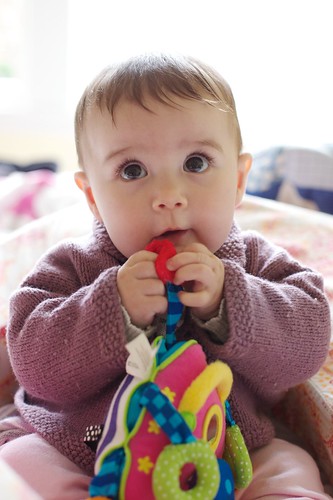
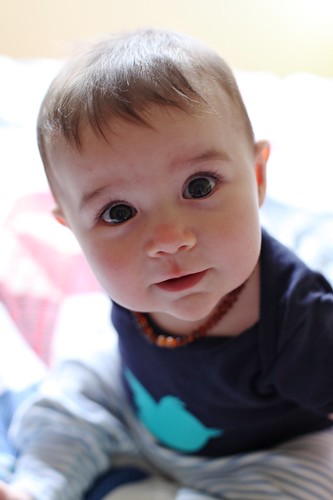
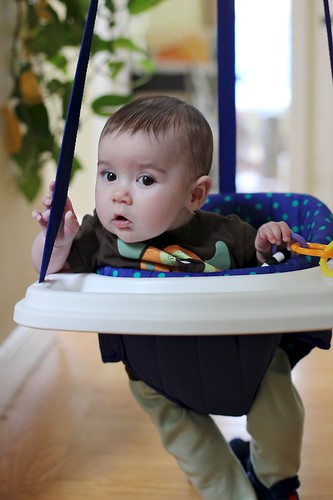
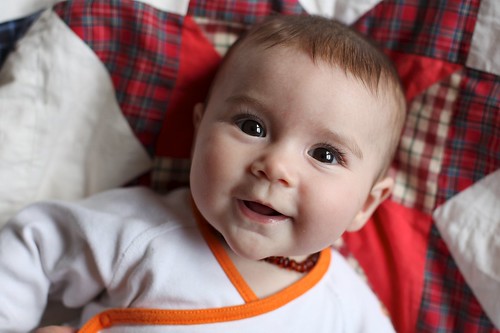
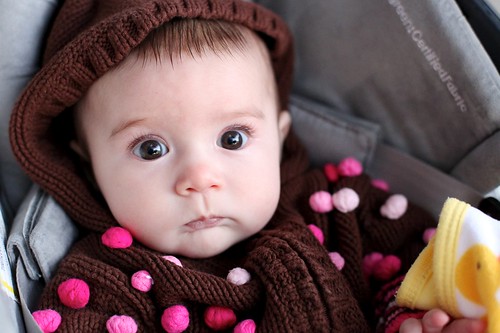
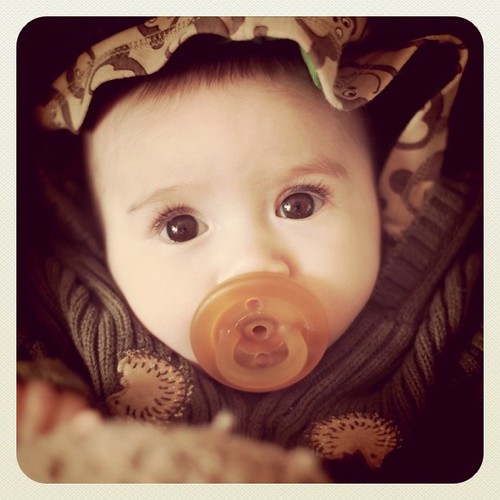
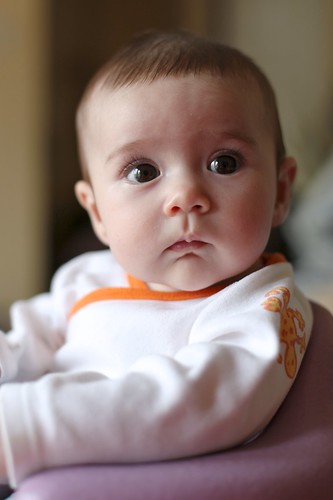
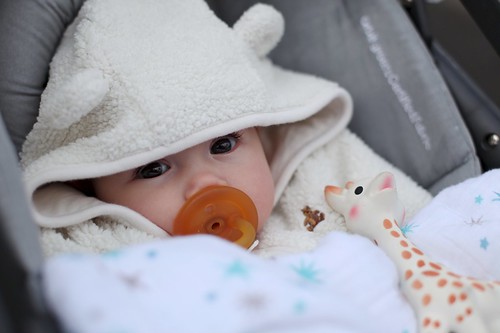
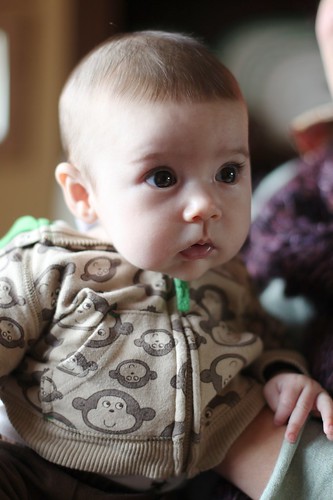
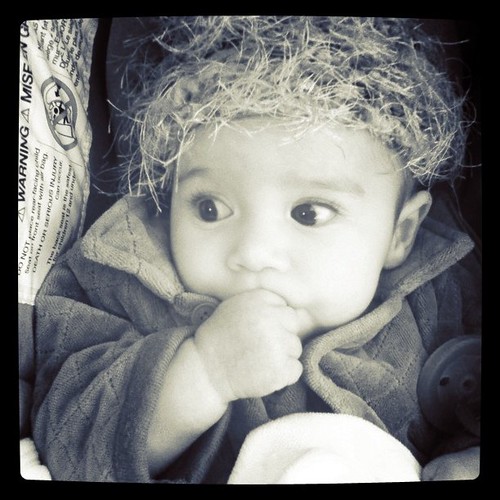
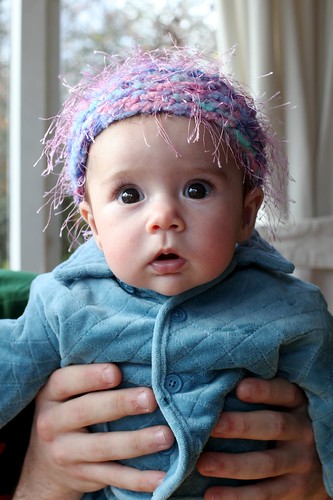
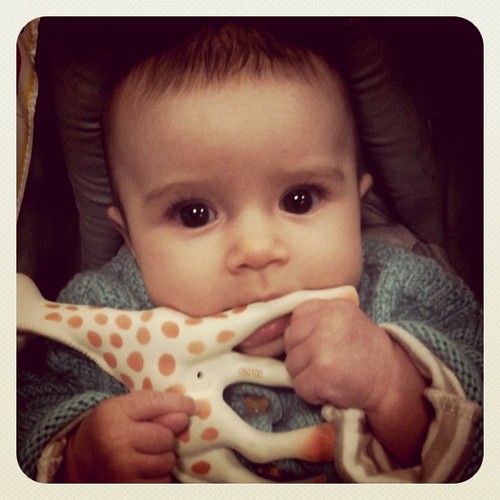
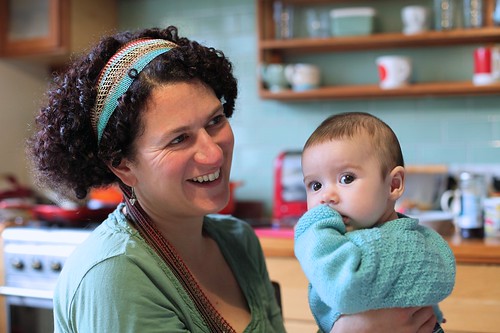
I was really taken aback when Lux started saying "buh buh buh" recently. It shouldn't have been surprising—I think it's pretty much normal for six months—but something about those particular syllables seemed suddenly grown up, in a way that none of the previous half-year of sounds had stood out.
The sound "b" is plosive, and of course Wikipedia identifies it properly as a voiced bilablial plosive: made by both lips, sounded by the vocal chords, and resulting from a released stop in airflow. And no, you don't find this sound anywhere else in the animal kingdom.
It's interesting that six months of shrieks and wails and cries and howls and gurgles and giggles and coos had not until now produced a sound which was uniquely human. Suddenly, with the introduction of this particular consonant, Lux's burblings become personal: quite literally, she's a person now—from a speech perspective.
I loved this recent post from Eric Baldeschwieler on the Yahoo! Developer Blog. Eric heads up the Hadoop effort at Yahoo!, and sums up why the company has nearly 100 people working on the project. What does Yahoo! get from this investment in open source?
help recruiting world-class scientists;
help building Hadoop and new tools;
access to trained talent, and easier collaboration;
avoiding obsolescence; and
good will from doing good.
This was music to my ears. A year ago when making the transition from Google to Twitter I published a couple of posts about this exact issue. In "Learning or Earning" I wrote
Over time, though, [the proprietary] advantage naturally erodes in relative terms. The open source stack grows ever thicker and by now includes pieces of technology like Cassandra, ZooKeeper, HDFS and Pig (and indeed the Hadoop project in general). The principles of huge-scale computing on commodity hardware are being better understood, and the open stack becomes ever-more viable for real-world work.
As the gap between commodity and proprietary narrows, the downsides of a homegrown stack become increasingly palpable. It takes longer to migrate acquired companies to your platform. There's no liquid talent market into which to tap when hiring. Maintaining a custom toolchain becomes burdensome. You risk making your engineers feel like outsiders in the broader tech community—ironically despite the hyper-advanced technology with which they work. Your existing employees may even resist or resent developing skills which aren't marketable elsewhere.
and I'm chuffed to hear directly from Yahoo! that the theory is true in practice, and converts into measurable value at the company level.
I've been to the Golden Gate National Cemetery in San Bruno twice now. I went for the first time in July 2010, just before Lux was born. I took a set I was proud of that time but I knew I'd be back.
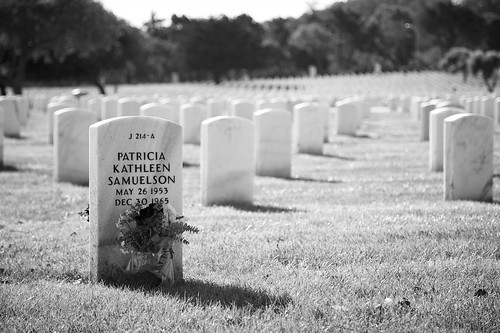
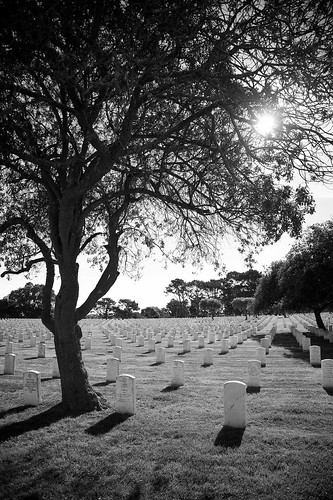
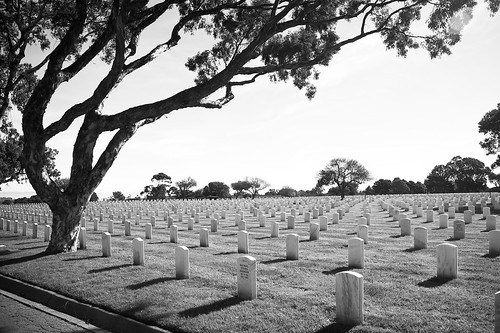
I finally made it down there last weekend, with Lux in tow and now just over six months old. We spent an hour or so wandering around the 162 acres, in amazing February sunshine. I took another set of pictures, and here are a few:
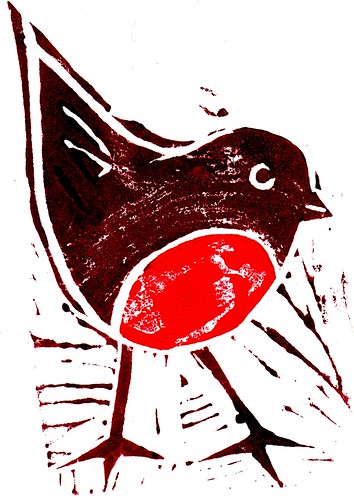
I had to share this: my favorite Christmas card this year was a beautiful homemade relief print from my sister Zoë in the UK. She has an amazing talent for all things crafty and creative. I loved this robin:
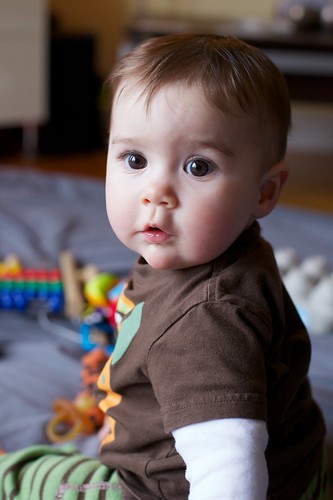
In other news, The Bean is half a year old today. Here's a picture taken this afternoon:
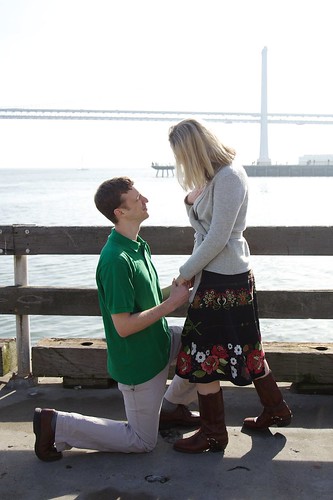
I'd photographed weddings before but never a proposal. This last weekend I got a chance to change that when my friend Jesse brought me in on his plan to ask his girlfriend Larisa to marry him, and asked if I'd be up for bringing my camera along to capture the event.
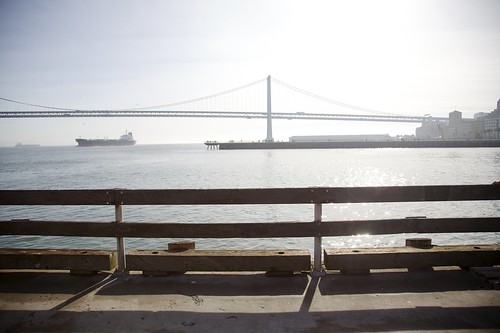
Jesse had a venue picked out for the occasion: a pier behind the Ferry Building Farmers' Market. Right by the water, with the Bay Bridge in the background, was his chosen spot:
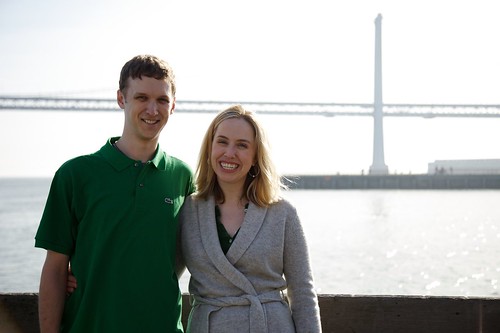
The idea was that we would wander round the market together, magically end up in this location, and then I would suggest that Jesse and Larisa pose for a photo against the lovely backdrop. It happened just as planned, and here's that photo:
Then a split-second later Jesse was down on one knee and bringing Larisa to breathless joyful tears with his proposal:
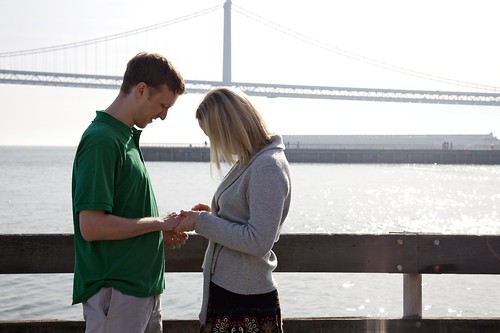
They exchanged rings (a very modern couple)
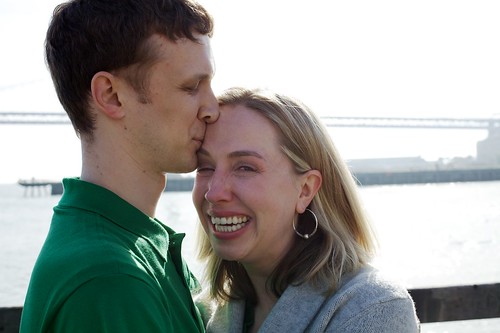
and, bless them, were engaged:
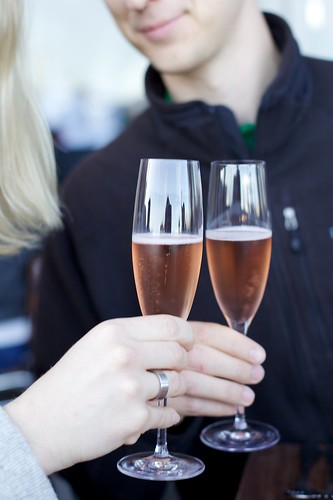
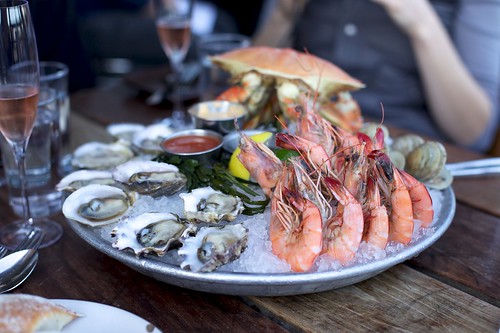
After that we wandered round the corner to Hog Island Oysters for a sparkling seafood celebration.
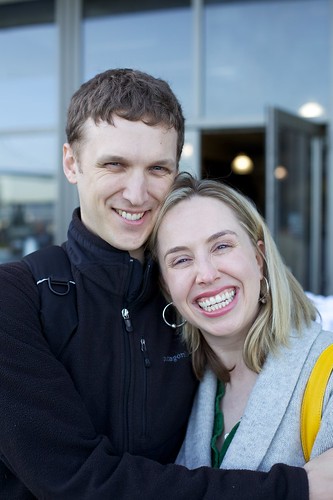
I'm so happy for Larisa and Jesse. I've known them many years, going back to when I lived in Colorado. They're super people.
A few weeks back I threw out a handful of reading recommendations for Product Managers. I got a bunch of good feedback and additional suggestions—in blog comments, Tweets and email at work (the latter by default I won't be sharing).
Jim Ray reminded me of Michael "Rands" Lopp, "another great source of geek and management advice". In particular there's the book Managing Humans (which I have on my stack but haven't read yet).
Finally Michelle Dy pointed me at a blog post by Jason Goldman (erstwhile Product VP at Twitter): Enable Float Alignment. In a similar vein to the previously linked Anatomy of a Feature, this speaks to the cost burden of every single feature added to a product and urges product designers to take more active stewardship in creating "just the experience they feel is best overall" rather than pandering to every niche desire.
I feel pretty lucky to have the benefit of input from these folks!
In other news, The Bean was 161 days old this weekend. I feel pretty lucky on that front too:
Wendy's parents live on the shore of a lake in Fort Collins, Colorado. I've been photographing that lake for the nearly eight years I've been with Wendy. Since we moved to San Francisco in 2005 most of the photos have been taken on Thanksgivings and Christmases when we go back to visit.
I wasn't particularly proud of this one I took at Thanksgiving 2006:
but four years later, Christmas 2010, I got a shot I love:
Looking back over the same period I'm also proud and excited about another transformation: Wendy herself in 2006 and in 2010.
At work I was asked by a colleague for reading recommendations for a Product Manager. Below is my half-hour answer; I expect that with more time I could do better. Think of the below as high in precision but low in recall.
Birth Story, Part I, got us through the first 42 hours of labor and ended at an inflection point in the story, to wit the arrival of Nurse Sharon. Part II took us from there through a Cesarian and a fairly shocking introduction to The Bean.
We pick up the story now at 1.50am on July 31st, with me heading upstairs to the NICU with Lux while Wendy stayed downstairs to go into post-op. We'd already discussed this arrangement before the operation: our wonderful midwife Maria, incredibly still with us after arriving at our house about 28 hours earlier, was going to look after mommy while daddy kept the baby company for her first few hours. I took this video at 1.56am in the NICU, with Lux 18 minutes old:
After that I pretty much sobbed for a couple of hours while the nurses poked and prodded Lux in her little glass box in intensive care.
At 3.25am, though, they released her from the NICU and I was allowed to wheel her down to meet Wendy in post-op. Here's a picture I took at 3.30am just after they were reunited:
and it was barely half an hour later that we were headed to our recovery room.
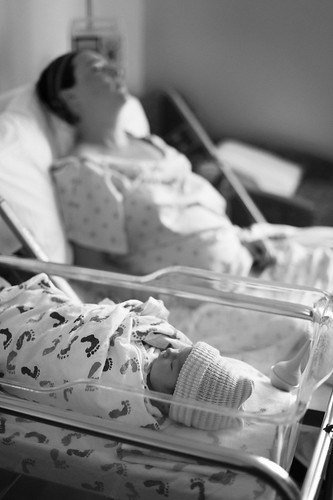
We slept from 4am until about 9am. During that time the hospital staff came and futzed with Lux, various tests and procedures to be undergone. We woke slowly and at 9.30am I took this picture of mom and daughter:
Nurse Sharon was amazing (days later, leaving the hospital, we would leave effusive praise for her on the "comments card"). A bluff Mancunian, she greeted us at the midnight shift change with an utterly no-nonsense "right then, let's get this baby out". Her energy was incredible, her support crucial, and she was hilarious as well as good-humored.
She arrived with Shakespearean timing and with her encouragement as well as a little more Pitocin, The Bean resumed its journey outwards (at this stage The Bean was still an "it": we were having either a Lux or a Harrison). For another hour Wendy labored with superhuman ferocity, screaming, roaring, each push bringing an extra sub-millimeter of Bean into view. It was going so slowly, but we figured we'd soon meet our baby.
Then at 1am on July 31st the doctor came into the room. He'd been watching the baby's vital signs from his desk elsewhere (remember earlier they'd hooked Wendy wirelessly up to monitors?) and was concerned that it was demonstrating increasing distress. He left while Wendy and I talked about what to do, but there wasn't much to discuss. We opted for a Cesarian.
After that things went really quickly. Dressed for theater by 1.10am, local anesthetic at 1.20am, final prep at 1.24am:
and at 1.30am the doctors had Wendy open and had started work on getting The Bean out.
What do you know, though, it wasn't straightforward. Wendy had spent the last 12+ hours pushing the baby into her pelvis; it took two doctors—one pulling from above and one, yes, pushing from below—as well as a bunch more grunting to get it back out. But finally, at 1.38am on July 31st, and with an enormous nearly comical plopping sound, The Bean arrived into the world.
The Bean, though, was bright blue and not in a good way. She was whisked away to the corner of the room and attended to at a resuscitation table: three nurses actively working and the fourth with a stopwatch. I joined them and never in my life have I been so terrified and transfixed.
"One minute". At 1.39am the nurse with the stopwatch calls out the time since The Bean was cut from mommy. The three other nurses are respectively flicking her feet, picking up and dropping her hands, and intubating her.
"Two minutes". At 1.40am there's more flicking, dropping, intubation, now suction, now oxygen, now a light slapping, now a vigorous rubbing. The Bean's still blue and lifeless.
"Three minutes". At 1.41am there's just nothing happening. Tiny twitches are the only signs of life from The Bean, still blue, and still being flicked and rubbed by surrounding nurses. Another round of suction, deep into the lungs this time. I can hear it. It's awful.
"Four minutes". 1.42am and it's more of the same. I can't quite believe what I'm watching. Limbs completely floppy; here is one tiny blue lifeless baby. The nurses stoically do their thing: rubbing, flicking, suctioning, jiggling The Bean.
I couldn't stand being there in the corner any more, so I went back to join Wendy at the operating table. She had no idea what was going on at the resuscitation station. The doctors were sewing her up again and she was joking with them about accidentally leaving instruments and swabs inside (local anesthetics: incredible!).
And then, about I guess a minute later at 1.43am we both heard a tiny cry from the corner of the room.
but in the real world it had begun about 4 hours earlier. I woke up at 7am or so to find her sat up next to me with a timer and a notepad. She'd been keeping records since 5.30am when the regular contractions had begun.
Quarter of an hour later, at 10am on July 29th one of our team of midwives dropped in and checked Wendy over. All was well and she told us to wait for the 5-1-1: contractions FIVE minutes apart, lasting ONE minute each, for ONE hour. Thus instructed, at 12.54pm Wendy, contractions and all, headed out for a burrito with our friend Andrea:
After that it was a waiting game. Contractions were coming frequently but not regularly. The afternoon went slowly and even by 7.59pm there wasn't much going on:
After that things started getting serious. By 10pm we had both Maria and Nova (midwives) with us at home, and I'd filled the birthing tub. Wendy labored all night (5cm dilated at 12am; 7cm by 6am), in and out of the water. That's a lot of work; a lot of contractions. For Wendy, a desperate urge to push but not being able to. For me, the desperate urge to sleep but not being able to.
Just past 8am on July 30th, by now almost 27 hours in labor, I went out to get sustenance from the shop around the corner:
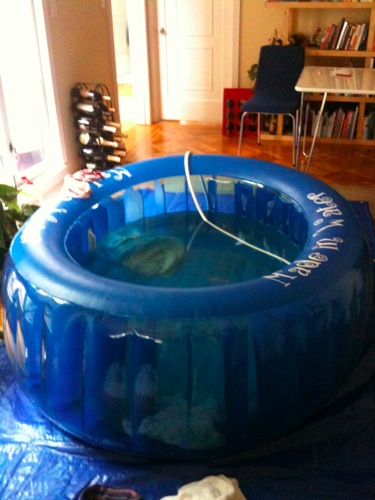
although the tea I brought back for Wendy I'd find amongst the aftermath, untouched, two days later, next to the birthing tub. This photo of the tub was taken about 9am on July 30th, just after I got back from fetching provisions:
By 12pm on July 30th Wendy had been in labor for about 31 hours and finally at 10cm dilated she was ready to start pushing. And Pushing. AND PUSHING. Standing, sitting, squatting, lying, in water and out. Since Wendy was epidural-free an entire range of natural positions were not merely possible but actually fully exploited. An hour later nothing doing, however:
And the same for the next four hours. Screaming, pushing, shouting, panting, sweating, hugging... but still no baby. And we're still at home, so at about 4.30pm on Jul 30th Wendy and I, exhausted, sweaty, fried, mucky and losing it, had an hour's nap on a tarp on the bed.
but within half an hour or so it was apparent that 36 hours of labor and six of hardcore pushing had sapped Wendy's energy and we were going to need some help.
Maria (midwife) gave us a ride to the hospital at 6.30pm on July 30th:
Wendy ate a banana on the way in between contractions
and by 7.30pm on July 30th the Pitocin was kicking in. Wendy was back in full-on pushing mode.
For what it's worth, the hospital facilities were amazing. They hooked Wendy wirelessly up to a machine which displayed in real time the baby's heartbeat and the waxing and waning of her contractions. For me, this was incredible: being able to see, follow along with, and even anticipate how Wendy was feeling was such a welcome personal connection to the process.
And the bed! Like a transformer, at the push of a button it whirred upwards and changed into a split raised formation perfect for leaning over while on one's knees. One more push of the button and it changed again into a chair form, with two flat areas at different levels. Later on, an attachment emerged: a bar which mounts on the bed and in certain configurations can be used to dangle from while squatting and squeezing a baby out. Incredible.
Things didn't go particularly speedily, though. At 11pm on July 30th we caught the very first glimpse of The Bean:
41 hours of labor and I now know what color hair @thebeean has. or at least what color it has on the tippy top of its head.
but even then it was amazingly slow going. Despite fierce and superhuman efforts on Wendy's part it didn't seem like there was much outward progress (it would later turn out that Wendy's pelvic opening simply wasn't large enough to pass the baby). At about 11.30pm on July 30th the doctor came in and let us know that we were already past the point where most hospitals would mandate more invasive medical assistance.
We had to decide what to do. The baby wasn't far enough out for suction or for forceps, so a Cesarian was the only viable intervention option. That's a far cry from our original ideas for the birth (home, natural, no drugs) and so far Wendy was still painkiller-free, with just a little saline and a little Pitocin on a drip. We took a break, hugged, talked, and decided to keep going with the pushing for another hour.
Right after that, at the midnight shift change, Nurse Sharon arrived.
I don't usually post so directly about my work but I'm getting asked about this and it's important: Twitter is not censoring trending topics concerning Wikileaks. There's even an official statement about it from our comms team, hereby reproduced:
Twitter is not censoring #wikileaks, #cablegate or other related terms from the Trends list of trending topics.
Our Trends list is designed to help people discover the ‘most breaking’ breaking news from across the world, in real-time. The list is generated by an algorithm that identifies topics that are being talked about more right now than they were previously.
There's a number of factors that may come into play when seemingly popular terms don’t make the Trends list. Sometimes topics that are popular don’t break into the Trends list because the current velocity of conversation (volume of Tweets at a given moment) isn’t greater than in previous hours and days. Sometimes topics that are genuinely popular simply aren’t widespread enough to make the list of top Trends. And, on occasion, topics just aren't as popular as people believe.
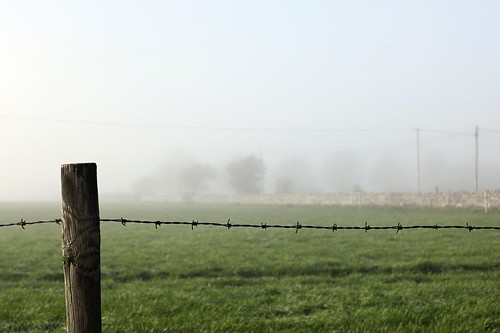
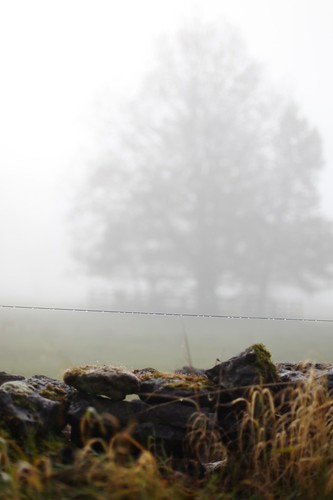
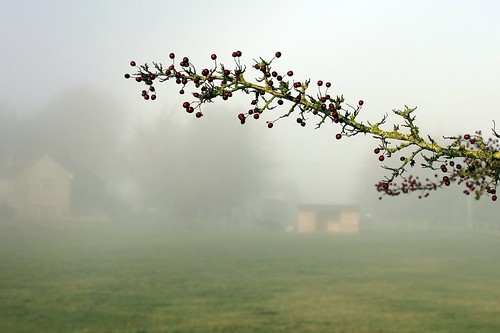
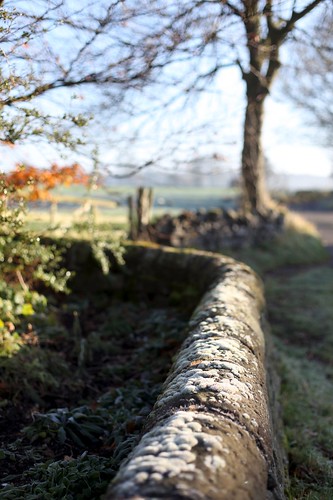
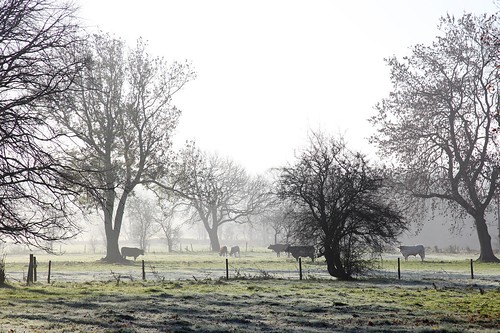
Day four in Derbyshire we woke up to a light fog and a thick frost. San Francisco gets one used to the former but not so much the latter. I popped out and managed to take a few photos before either had cleared. This is the gate at the bottom of my parents' drive:
the wall:
and the field beyond, with cows belonging to the couple who live across the road:
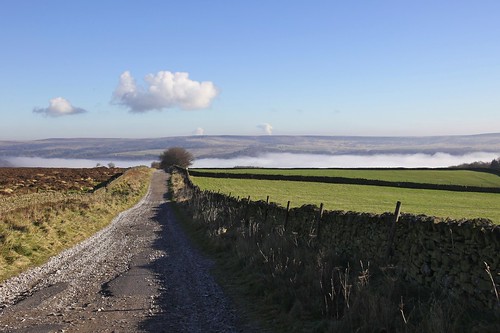
Later on, on a walk above Grindleford, you could see the fog sitting in the Hope Valley below:
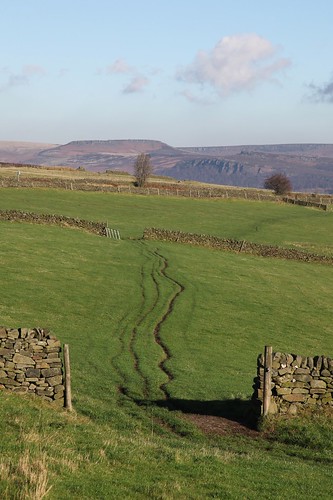
although where we were it was as bright and clear as can be:
My parents live in Derbyshire, about 15 miles from the city of Sheffield where I grew up. My sister now lives with her family in Sheffield, and on day three in the UK we visited her, introducing Lux to her two sons (Lux's cousins) Tate and Gil.
While there we all dropped in on Endcliffe Park and fed the ducks in the pond... the same pond where I used to feed the ducks (different ducks, presumably) thirty years ago. The experience, as well as the feel of the season, was powerful. I've been in this park many a November and it was just the same. Autumn leaves were mushy underfoot, the air was wet and cold, the sky was overcast and the sun had barely made it over the horizon.
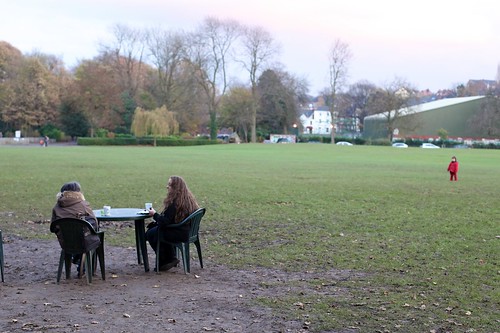
And yet, and yet! British hardiness prevails: witness this dusk picnic in the mud, with the lone forlorn child in the background:
I took a handful of photos, of which some highlights below. Zoë and Lux: